
Agnes
Email:saler3@kinscoter.com
Whatsapp:+86 16676870193
Mobile:+86 16676870193
Office: +86-768-2217942
WeChat: ik_THKJ1
Early conversations during the 2026 autumn Hong Kong trade shows and Canton Fair period point to three priorities for portable fan sourcing for 2027: battery replaceability for EU-market projects, stronger product differentiation for Korean buyers, and retail appeal combined with commercial viability for Japanese buyers.
Buyers may all be looking for new fans, but they are not necessarily evaluating them for the same reasons. A product that attracts attention at a booth still needs to fit the buyer’s market, sales channel, budget, and launch schedule.
These observations come from customer discussions during the first days of the autumn trade fair season. They are not a market-wide survey. However, they offer a useful starting point for brands, importers, distributors, and retailers planning their next portable fan range.
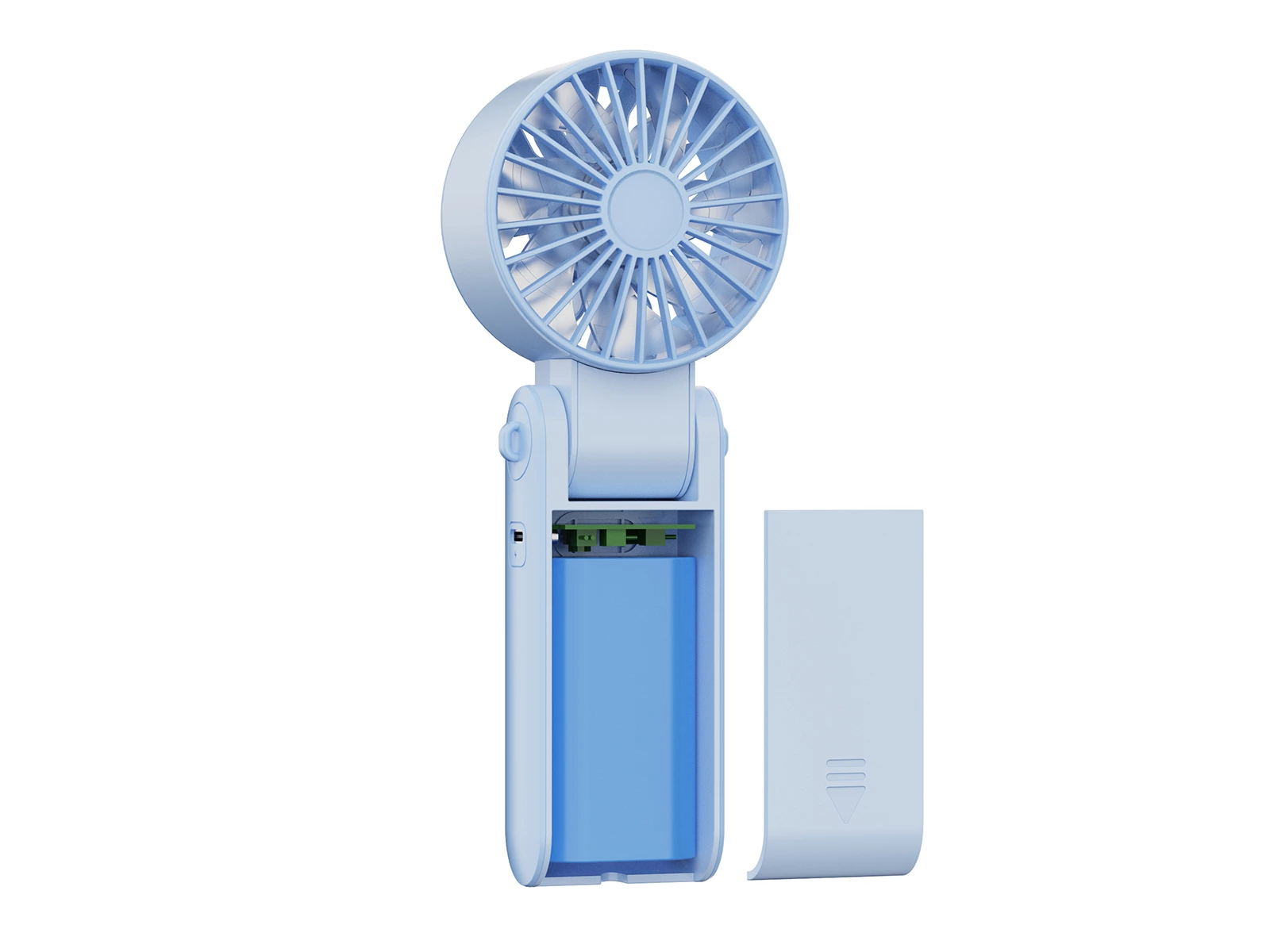
Among the European customers we spoke with, preparation for upcoming EU battery requirements was a prominent topic. Buyers wanted to know whether new fan designs would support battery removal and replacement.
Some customers also expressed interest in preparing bulk orders quickly and receiving goods before February 2027.
These conversations involve two related decisions: which product design to select for future sales, and how to plan near-term purchasing and delivery.
Article 11 of the EU Batteries Regulation applies from 18 February 2027. It generally requires portable batteries incorporated into products to be readily removable and replaceable by the end user, subject to applicable conditions and exceptions. Buyers should assess the complete replacement arrangement rather than assume that an accessible battery compartment alone establishes compliance. See the EU Batteries Regulation and the European Commission’s guidance on battery removability requirements and exceptions. eur-lex.europa.eu
For procurement discussions, that means asking practical questions:
These questions help buyers evaluate a design early, before packaging, tooling, and order commitments make changes more difficult.
Some customers want to bring purchasing and shipping forward. That is useful information for production planning, but it should not be described as a universal opportunity to avoid the upcoming requirements.
The February date concerns the application of regulatory provisions, not simply a single customs-clearance deadline for every product. Buyers should have the applicable transition and market-placement conditions assessed for their particular supply arrangement.
For the supplier discussion, the immediate task is to clarify the required arrival date, order quantity, product version, and current production status. Those details establish whether an accelerated schedule is realistic.
Korean customers in our discussions continued to show interest in genuinely new products and fresh designs. At the same time, some described a more cautious approach after reviewing their 2026 sales results.
For these buyers, the number of new models they can introduce is limited. Selection therefore becomes more demanding.
The relevant question is no longer simply whether a fan is new. It is whether the product offers a strong enough reason to receive one of the available launch slots.
A buyer should be able to identify how a proposed fan differs from products already in the range.
That difference may involve appearance, handling, controls, portability, or another confirmed feature. The important point is that it should have a clear connection to the intended customer and use case.
A useful evaluation starts with three questions:
A visible change may attract initial interest, but the buyer still needs to decide whether it supports the proposed positioning and price.
When launch opportunities are limited, overlapping products can be difficult to justify.
A prospective model might fill a missing price point, address a different usage scenario, or introduce a distinct design direction. The buyer should identify that role before committing to development or inventory.
This does not mean every new fan needs more functions. Additional features should earn their place through customer value and commercial feasibility.
For buyers preparing a design discussion, a clear explanation of what to retain, change, and avoid can make feedback more useful. Our guide to what buyers should confirm during industrial design provides a practical framework for that stage.
Japanese customers in our conversations placed particular emphasis on new styles and whether a product could work in physical retail.
A fan can look attractive during a supplier presentation and still be difficult to sell from a shelf. The retail environment gives the product less time to communicate its value.
That makes product appearance, packaging, demonstration, and pricing part of the same purchasing decision.
For a store-based sales channel, buyers can assess the customer journey in a simple sequence:
Notice the product → understand its purpose → examine or try it → evaluate the price → decide whether to buy.
Each step raises a different question.
Can the product attract attention within the available display space? Does the packaging explain the main benefit clearly? Is operation easy to understand? Does the physical product support the impression created by its presentation?
Where demonstration is possible, the experience should help customers understand the product without requiring a lengthy explanation from store staff.
These are evaluation criteria rather than a promise of fast sales. Actual retail performance still depends on the product, location, pricing, merchandising, and customer response.
The Japanese buyers we spoke with also considered whether an attractive new product could generate a workable return after costs.
Comparing factory quotations is only one part of that assessment. Depending on the purchasing arrangement and sales channel, buyers may also need to account for:
The goal is to understand whether the proposed retail price can support the complete commercial arrangement.
A lower factory price does not answer that question by itself. Buyers need a consistent cost comparison and a realistic view of the intended sales channel.
The regional observations suggest different priorities, but they should not become rigid assumptions about every buyer.
An EU-market customer may also prioritize design. A Korean brand may depend on physical retail. A Japanese importer may need detailed battery-replacement planning.
The more useful approach is to evaluate every project across the same five dimensions, then adjust their importance to the buyer’s situation.
| Evaluation area | Main purchasing question | Useful information to request |
|---|---|---|
| Market requirements | Is the proposed product configuration suitable for the destination market? | Product configuration, battery-replacement details, and relevant compliance documentation |
| Differentiation | Why should this model enter the existing product range? | Physical sample, confirmed feature comparison, and intended positioning |
| Channel suitability | Can customers understand and evaluate the product in the intended sales environment? | Packaging proposals, demonstration arrangements, and product dimensions |
| Commercial viability | Does the planned selling price support the complete cost structure? | Itemized quotation, packing details, and logistics inputs |
| Delivery readiness | How much work remains before the product can be supplied? | Current sample stage, outstanding approvals, material status, and production schedule |
This framework turns a promising booth conversation into a structured purchasing discussion.
It also helps buyers compare products fairly. A concept model and a production-ready model should not be treated as equally ready for an urgent order.
At a trade show, “new” can describe an appearance concept, a functional prototype, a first mold-trial sample, or a product already prepared for production.
Those stages carry different implications for timing and risk.
Before requesting a delivery commitment, ask what the displayed sample confirms and what remains open. Appearance approval does not necessarily mean the internal structure is finalized, and a functioning sample does not necessarily confirm production consistency.
Our comparison of appearance prototypes, functional prototypes, and T0 samples explains those distinctions.
For products already undergoing mold trials, agree on the T0, T1, and T2 sample approval criteria before setting the next milestone.
This is particularly useful when a buyer wants both a distinctive new design and a short delivery schedule. The project’s actual development status determines how those objectives can be balanced.
After the exhibition, the most useful follow-up is a concise brief explaining what the buyer needs the product to achieve.
Include:
Separate confirmed requirements from preferences that remain open for discussion. This helps the manufacturer identify trade-offs and propose a suitable development route.
A portable fan product brief can organize that information without requiring the buyer to prepare engineering drawings.
The early conversations from the 2026 autumn trade fair season highlight three distinct purchasing considerations: EU battery readiness, selective investment in differentiated products, and retail appeal supported by workable margins.
For 2027 sourcing, a promising fan needs to fit the market and channel as well as the product range. Its development status and delivery plan also need to support the intended launch.
Discussing your 2027 portable fan range? Share your target market, sales channel, price positioning, expected quantity, and launch schedule with Kinscoter to explore an appropriate product or development direction.
Start with destination-market requirements, product differentiation, sales-channel suitability, commercial viability, and delivery readiness. Their relative importance depends on the buyer’s business model and intended product range.
Article 11 of the EU Batteries Regulation applies from 18 February 2027. Buyers should review the requirements, applicable exceptions, and the proposed product configuration rather than assume all battery-powered products follow an identical compliance route.
Compare the proposed product with the buyer’s existing range. Identify the visible difference, the practical customer benefit, and the commercial role of the new model. Novelty alone does not establish that the product deserves a launch slot.
Consider shelf visibility, packaging clarity, ease of demonstration, product handling, and price positioning. Evaluate the complete cost structure alongside these factors to determine whether the product can support the intended channel margins.
Confirm the exact product version, development stage, outstanding approvals, material availability, order quantity, and required arrival date. Establish whether the quotation concerns a production-ready product or a design that still needs engineering, tooling, or sample approval.
Tell us about your product or OEM/ODM requirements — our team will respond within one business day with product recommendations and manufacturing solutions.
Pick the specialist for your business — we reply within one business day.
Agnes
Email:saler3@kinscoter.com
Whatsapp:+86 16676870193
Mobile:+86 16676870193
Office: +86-768-2217942
WeChat: ik_THKJ1

Tina Chen
Email:sales2@cztongheng.com
Whatsapp:+86 152 1853 1931
Mobile:+86 152 1853 1931
Office: +86 768 221 7942
WeChat: czkinter

Charmy Zhou
Email:saler1@kinscoter.com
Whatsapp:+86 138 2832 9041
Mobile:+86 138 2832 9041
Office: +86 768 221 7942
WeChat: ik-THKJ